TESDA Mango Production and Processing Courses

TESDA offers specialized courses in Mango Production and Processing Level II, providing individuals with the skills needed to excel in the mango industry. These programs are designed to equip learners with the knowledge and competencies required for both the cultivation and processing of mangoes, ensuring high-quality production from farm to finished product. Whether you’re interested in growing mangoes or creating processed mango goods, these courses cover essential practices to help you succeed.

Also read: TESDA Food Processing Courses

The Mango Processing Level II course focuses on techniques such as fermentation, pickling, sugar concentration, drying, and dehydration. It also teaches the use of essential tools like refractometers, food processors, and sealers, while emphasizing food safety and environmental guidelines. Meanwhile, the Mango Production Level II course trains individuals in nursery operations, orchard maintenance, and harvest/post-harvest handling to ensure optimal mango growth and yield. These comprehensive programs aim to build a skilled workforce for the thriving mango industry.

 TESDA Mango Production and Processing Level II Courses

Benefits

Here are some benefits of taking  Mango Production and Processing Level II Courses by TESDA:

  • Skill Development: Gain practical skills in mango production and processing, including fermentation, pickling, drying, and dehydration techniques.
  • Industry-Standard Knowledge: Learn to comply with regulations like the Food Safety Act 2013, cGMP, HACCP, OSHS, and 7S of Good Housekeeping for safe and efficient food processing.
  • Hands-On Training: Operate essential tools and equipment such as salinometers, refractometers, food processors, and weighing scales.
  • Career Opportunities: Be prepared for roles in mango processing and production, opening up job opportunities in food manufacturing and agriculture.
  • Quality Control Expertise: Acquire competencies in inspecting defects, ensuring seal integrity, and verifying product labels for better quality assurance.
  • Sustainability Practices: Understand environmental rules and regulations to ensure sustainable mango production and processing.
  • Entrepreneurial Potential: Use the skills to start your own mango processing business or manage a mango orchard effectively.
  • Comprehensive Training: Cover the entire mango production lifecycle, from nursery operations to postharvest handling.

Mango Processing Level II

Mango Processing Level II focuses on skills required to process mangoes through fermentation, pickling, sugar concentration, drying, and dehydration. It includes packing processed mangoes using simple equipment like sealers and ensuring compliance with Food Safety Act 2013, cGMP, HACCP, OSHS, and 7S principles, along with environmental regulations. Competencies also cover inspecting packaging materials, seal integrity, and labeling, as well as calibrating and operating tools like salinometers, refractometers, food processors, and weighing scales.

TESDA Mango Processing Level II Course

What is Mango Processing Level II?

The Mango Processing Level II course covers competencies in fermenting, pickling, sugar concentration, drying, and dehydration of mangoes. It also includes packing, operating basic equipment, and adhering to food safety regulations.

Units of Competency

The Competency Standards consist of the Units of Competency listed below:

BASIC COMPETENCIES

  • Participate in workplace communication
  • Work in a team environment
  • Solve/address general workplace problems
  • Develop career and life decisions
  • Contribute to workplace innovation
  • Present relevant information
  • Practice occupational safety and health policies and procedures
  • Exercise efficient and effective sustainable practices in the workplace
  • Practice entrepreneurial skills in the workplace

COMMON COMPETENCIES

  • Apply Food Safety and Sanitation
  • Use Standard Measuring Devices / Instruments
  • Use Food Processing Tools, Equipment and Utensils
  • Perform Mathematical Computation
  • Implement Good Manufacturing Practice Procedure
  • Implement Environmental Policies and Procedures

CORE COMPETENCIES

  • Process Mangoes by Fermentation and Pickling
  • Process Mangoes by Sugar Concentration
  • Process Mangoes by Drying and Dehydration

Job Opportunities

A person who has attained these Competency Standards is fully qualified to:

  • Food Processing Worker
  • Food Production Worker/Staff
  • Packing Staff/Packer
  • Quality Control Staff

They may also be referred to by specific product titles such as:

  • Mango Processor
  • Fruit Candy Maker

Qualifications

Prospective trainees or students who aspire to enroll in this course are expected to meet the following qualifications:

  • Good communication skills, both oral and written
  • Effective communication, verbal or non-verbal
  • Basic arithmetic proficiency

Instructor Credentials

The trainer qualifications for this Mango Processing Level II require the following:

  • Must be a practicing trainer or have attended 80 hours of trainer’s training in the last three (3) years.
  • Must have 2 years of relevant industry experience within the last five years.

NOTE: Consider iWER guidelines (apprenticeship) when converting training/seminar to industry experience.

Mango Production Level II

Mango Production Level II covers the skills needed to grow and manage mangoes successfully. It includes tasks such as nursery operations, planting mango trees, maintaining and caring for the orchard, and handling harvest and post-harvest activities.

TESDA Mango Production Level II Course

What is Mango Production Level II?

This course covers skills needed for mango production, including nursery operations, planting, orchard care, and harvest/postharvest tasks.

Units of Competency

The unit of competency includes the following standards:

Basic Competencies

  • Participate in workplace communication
  • Work in team environment
  • Solve/address general workplace problems
  • Develop career and life decisions
  • Contribute to workplace innovation
  • Present relevant information
  • Practice occupational safety and health policies and procedures
  • Exercise efficient and effective sustainable practices in the workplace
  • Practice entrepreneurial skills in the workplace

Common Competencies

  • Apply safety measures in farm operations
  • Use farm tools and equipment
  • Perform estimation and calculations
  • Process farm wastes
  • Perform record keeping

Core Competencies

  • Perform mango nursery operations
  • Plant mango
  • Care and maintain mango orchard
  • Carry-out harvest and postharvest operations

Job Opportunities

A person who has met these Competency Standards is qualified to be:

  • Mango Grower
  • Mango Farmer
  • Mango Nursery Operator

Qualifications

To enroll in this course, prospective trainees or students are required to meet the following qualifications:

  • Proficient in oral and written communication
  • Skilled in both verbal and non-verbal communication
  • Capable of performing basic arithmetic operations

Instructor Credentials

The trainer qualifications for this Mango Production Level II require the following:

  • Training certificate in Mango Production Level II required.
  • Must be a practicing trainer or have attended 80 hours of trainer’s training in the last three years.
  • 2 years of relevant industry experience within the last five years is needed.

Please follow the iWER guidelines when converting training or seminars into industry experiences.

Sample of Certificate of Completion

tesda-certificate-sample

Requirements

To enroll in this course, you will need the following documents:

  • PSA Birth Certificate
  • High School or College Diploma
  • Certified True Copy of Official Transcript of Records or Form 137
  • Certificate of Good Moral Character or GMRC
  • 1 x 1 and/or 2 x 2 pictures

To obtain further details, please reach out to the enrollment site that aligns with your requirements. Kindly note that the criteria may vary.

Also read: TESDA Cacao Production and Processing Courses

Summary

TESDA Mango Production and Processing Level II Course equips individuals with the skills needed for mango production and processing. It’s perfect for those starting a mango business or improving their skills in the field. The course combines theory and practice, covering planting techniques, pest management, post-harvest handling, and processing methods like drying, canning, and juicing. Graduates receive a National Certificate Level II from TESDA, opening doors to agriculture jobs or opportunities to start a mango-based business.
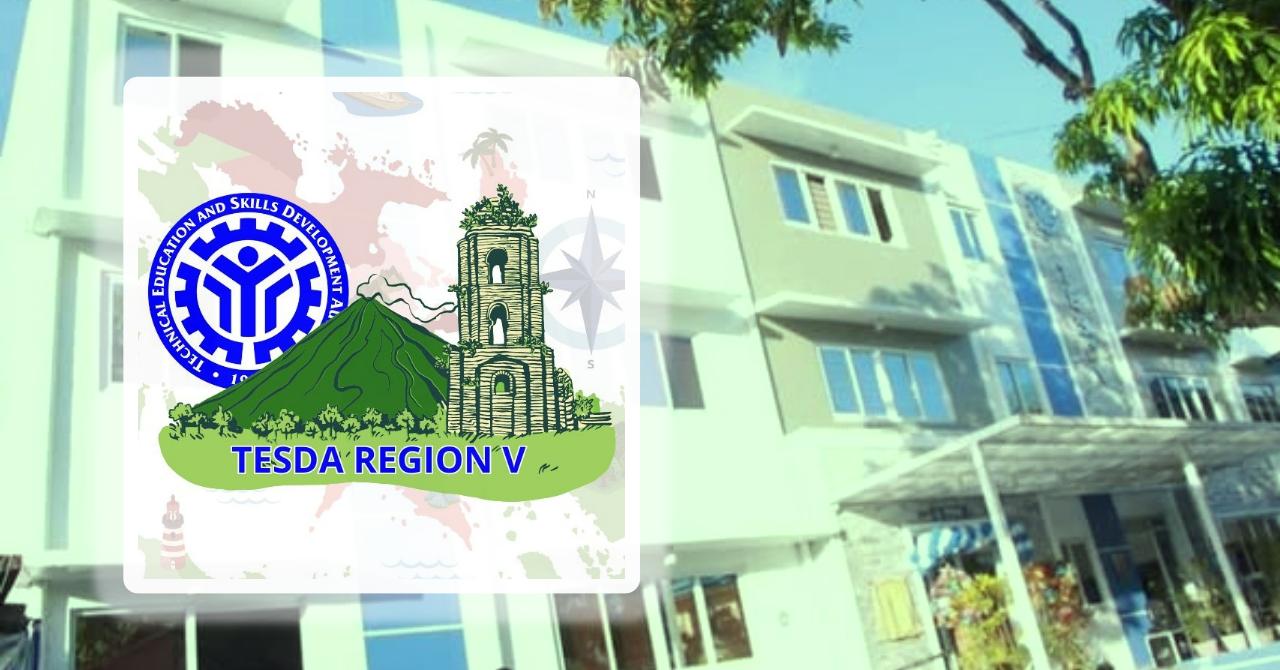
TESDA Region 5 Office

TESDA Region 5 Office

The TESDA Region 5 office is one of the agency’s regional offices, which are located across the Philippines. The office can be found in Legazpi City, Albay, with their official Facebook page, “Technical Education and Skills Development Authority Region V Bicol.”

Through TESDA Region 5, Filipinos can sign up for technical and vocational training programs, language courses, scholarships, and other services. The offices serves people who are based the six provinces of Bicol Region: Albay, Camarines Norte, Camarines Sur, Catanduanes, Masbate, and Sorsogon.

TESDA Region 5 Office
Image Credits: Here in Legazpi ALBAY FB page (building), Technical Education and Skills Development Authority Region V Bicol FB page (logo)

Cities/Provinces Under TESDA Region 5

TESDA Region 5 covers the four provinces of Ilocos Region, namely: Ilocos Norte, Ilocos Sur, La Union, and Pangasinan. It also includes one independent city, Dagupan City, which is geographically located in Pangasinan province.

TESDA Region 5 covers the Bicol Region, which is comprised of Albay, Camarines Norte, Camarines Sur, Catanduanes, Masbate, and Sorsogon provinces, along with several cities: Legazpi City, Naga City, Masbate City, and Sorsogon City.

The regional center of Bicol is Legazpi City; this is also where the TESDA regional office is located. Furthermore, the agency operates provincial offices in these places: Legazpi City, Albay; Daet, Camarines Norte; Naga City, Camarines Sur; Calatagan Proper, Catanduanes; Masbate City, Masbate; and Sorsogon City, Sorsogon.

Programs and Services

The regional office provides Technical Vocational Education and Training (TVET) programs through four modalities: center-based, enterprise-based, community-based, and school-based.

Center Based Programs

These programs are held in TESDA’s regional and provincial traning centers. In Region 5, these centers are located in the following:

Regional Training Center

  • Regional Training Center in Pili, Camarines Sur

Provincial Training Centers

  • Provincial Training Center – Catanduandes
  • Provincial Training Center – Guinobatan, Albay
  • Provincial Training Center – Malilipot, Albay
  • Provincial Training Center – Labo, Camarines Norte
  • Provincial Training Center – Libmanan, Camarines Sur
  • Provincial Training Center – Masbate
  • Provincial Training Center – Sorsogon

Community Based Programs

Community-based programs are provided to the poor, marginalized, and vulnerable sectors. These include people who cannot afford or are unable to access formal training programs. In addition to training, these programs help establish livelihood enterprises that will be managed by the learners/trainees themselves. Notably, the programs also involve the participation of local government units (LGUs), non-government organizations (NGOs), and other partners.

Enterprise Based Programs

These programs are held in companies or firms; they come in three main types: Dual Training System, Apprenticeship Program, and Learnership Program.

As the name implies, the Dual Training System is conducted in two venues: the school/training center, and the company/firm. It focuses on providing technology-based training and education.

Meanwhile, the Apprenticeship Program is a training and employment program involving a contract between an employer and an apprentice. Usually, it covers a four to six-month training period.

As for the Learnership Program, this is an on-the-job training (OJT) type of program, covering a period of six months or less.

School Based Programs

These programs are carried out through TESDA-administered schools. They include post-secondary courses that don’t exceed three years. In Region 5, TESDA’s partner schools or institutions are the following:

  • San Francisco Institute of Science and Technology (SFIST) in Malilipot, Albay;
  • Camarines Sur Institute of Fisheries and Marine Sciences (CASIFMAS) in Pasacao, Camarines Sur;
  • Ragay Polytechnic Skills Institute (RPSI) in Ragay, Camarines Sur;
  • Cabugao School of Handicraft & Cottage Industries (CSHCI) in Bato, Catanduanes;
  • Masbate Institute of Fisheries and Technology (MIFT) in Milagros, Masbate;
  • Bulusan Vocational Technical School (BVTS) in Bulusan, Sorsogon; and
  • Sorsogon National Agricultural School (SNAS) in Castilla, Sorsogon.

Language Skills Institutes

For Filipinos who are planning to work abroad, TESDA offers language and workplace communication courses through its Language Skills Institutes (LSIs). At present, these institutes courses on English, Japanese, Korean, Mandarin, and Spanish.

TESDA’s LSIs in Region 5 are as follows:

  • TESDA LSI – Regional Training Center in Pili, Camarines Sur; and
  • TESDA LSI – San Francisco Institute of Science and Technology (SFIST) in Malilipot, Albay.
TESDA Region 5 Office
Image Credit: Technical Education and Skills Development Authority Region V Bicol / Facebook

List of TESDA Courses in Region 5

TESDA has an extensive list of courses in various fields: food and beverage services, entrepreneurship, electronics, construction, tourism, hospitality, computer technology, agriculture, and more.

In Region 5, the list of courses offered by TESDA include:

  • Agroentrepreneurship NC II
  • Barangay Health Services NC II
  • Bookkeeping NC III
  • Commercial Refrigeration Installation and Servicing NC III
  • Community-Based Trainers’ Methodology Course
  • Dressmaking NC II
  • Driving NC II
  • Electrical Installation and Maintenance NC II
  • Electronic Products Assembly and Servicing NC II
  • Organic Agriculture Production NC II
  • Shielded Metal Arc Welding NC I
  • Shielded Metal Arc Welding NC II
  • Tile Setting NC II
  • Trainers’ Methodology Level 1

Assessment and Certification

Upon completing a course, learners undergo evaluation done by competency assessors in TESDA’s accredited assessment centers. They are evaluated using the Philippine TVET Competency Assessment and Certification System (PTCACS). Passing the assessment is followed by certification, with the learners becoming part of TESDA’s Registry of Certified Workers. This is basically a pool of certified workers for various jobs in the Philippines.

How to Apply for Jobs in TESDA Region 5

If you happen to be interested in working for TESDA, you can browse their job vacancies online and follow these steps to apply:

  1. Go to the Careers page on the TESDA website.
  2. On the search box, type your preferred position, item number (if available), and/or office location (e.g. Region 5), then tap “search.”
  3. Your search’s results will be shown on screen. Click “details” on a particular result to know more about it.
  4. The screen will display the item number, position, office location, salary, job description, qualification, and required documents.
  5. To apply for the job, upload the necessary documents through the link given on the page.
  6. Wait for the TESDA office to contact you for further instructions regarding your job application.

Contact Information: TESDA Region 5

For queries or concerns about TESDA Region 5, its programs, and services — you can get in touch with them through these details:

Address: Regional Center, TESDA Regional Office V, Rawis, Legazpi City, 4500 Albay
Telephone: (052) 482 1250
Email: region5@tesda.gov.ph
Website: https://www.tesda.gov.ph/
Facebook: https://www.facebook.com/TESDARO5/

Google Map Location:

Provincial Offices Under TESDA Region 5

Similar to other regional offices, TESDA Region 5 works hand-in-hand with several provincial offices. Here is a list of TESDA’s provincial offices in the Bicol Region:

TESDA Provincial Office – Albay

Address: TESDA V Regional Office Compound, Regional Center Site, Rawis, Legaspi City
Telephone: Smart 0919-078-4280 / Globe 0917-828-9539 / Globe Landline (052)-201-8531
Email: region5.albay@tesda.gov.ph

Google Map Location:

TESDA Provincial Office – Camarines Norte

Address: LGU-Daet Compound, Brgy. Pamorang on Daet, Camarines Norte
Email: region5.camarinesnorte@tesda.gov.ph

Google Map Location:

TESDA Provincial Office – Camarines Sur

Address: 2nd Floor DOLE Bldg., Naga City Hall, Naga City
Telephone: (054) 473-1085
Email: region5.camarinessur@tesda.gov.ph

Google Map Location:

TESDA Provincial Office – Catanduanes

Address: CSU Compound, Moonwalk, Calatagan Proper, Catanduanes
Telephone: (0928) 331-5545
Email: region5.catanduanes@tesda.gov.ph

Google Map Location:

TESDA Provincial Office – Masbate

Address: PEO Compound, Capitol Road, Masbate City
Telephone: (056) 588-2423 / (056) 333-5410
Email: region5.masbate@tesda.gov.ph

Google Map Location:

TESDA Provincial Office – Sorsogon

Address: City Hall Compound, Cabin-an, Sorsogon City
Telephone: (056) 256-0961 / (056) 256-1964
Email: region5.sorsogon@tesda.gov.ph

Google Map Location:

If you are based in the Bicol Region and you want to enroll in a Technical Vocational Education and Training (TVET) program, simply visit or contact TESDA Region 5 or the nearest TESDA Provincial Office. On the other hand, if you prefer to study online, read this guide on how to enroll in a course in TESDA’s online program.

error: Content is protected !!